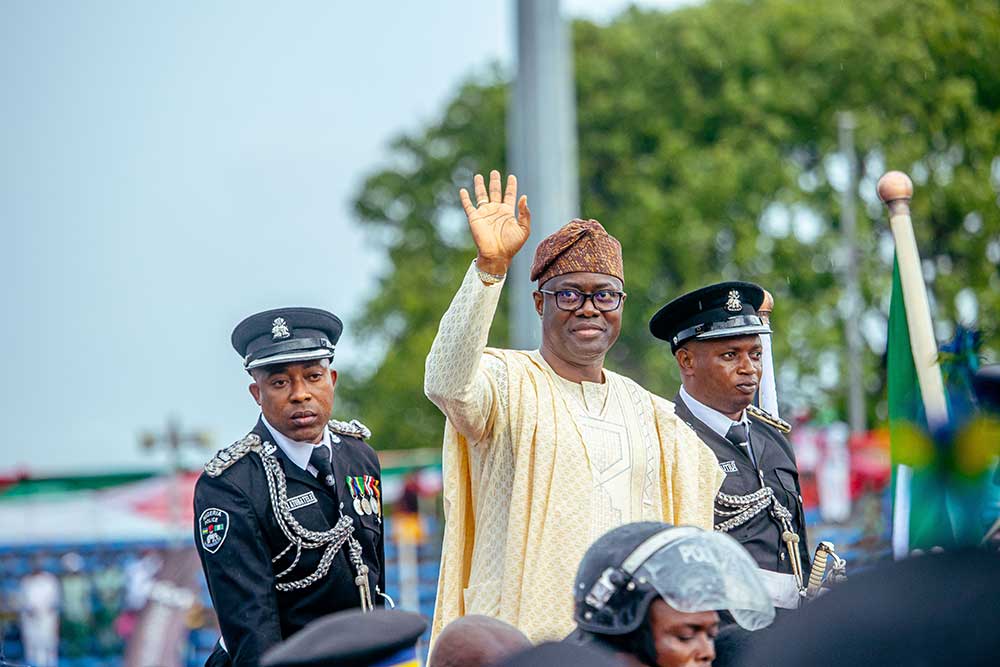
Welcome to the Official Website of Seyi Makinde Presidential Campaign 2027

Nigeria stands at a defining economic crossroads. The Nigerian economy faces numerous challenges. The economic should work for the people not against them. While reforms have brought some stability, millions of Nigerians still struggle with inflation, unemployment, economic rescission, trade imbalance and limited opportunities.
A strong economy is not measured by statistics alone—it is measured by how well it improves the daily lives of the ordinary people. Today, that connection remains broken.
However, these issues also present opportunities for reform and growth, good governance, fairness, openness and accountability can drive economic resilience.
Nigeria’s economic challenges are deep-rooted and interconnected:
- Inflation & Cost of Living: Chronic inflation continues to erode purchasing power, especially for food, transport, and fuel. Following the poorly implemented fuel subsidy removal and currency reforms, it has become increasingly unbearable for ordinary people to survive, further worsening economic hardship.
- Currency Depreciation & Instability: The continued flotation and policy mismanagement of the Naira against the US Dollar have led to sharp fluctuations in its value, driving up the cost of imports, eroding business confidence, and placing severe pressure on nearly all sectors of the economy.
- High Unemployment: Youth unemployment and labour underutilisation remain pressing challenges, fuelling social unrest and accelerating the loss of skilled talent through brain drain.

- Overreliance On Oil: The economy remains highly exposed to fluctuations in global oil prices due to limited diversification into productive sectors such as Industrial Agriculture and Technology.
- Energy Supply Shortages: Frequent blackouts and the persistent failure of the national power grid have forced many businesses into closure, and households are compelled to rely heavily on expensive generators, significantly increasing operational costs and reducing overall economic efficiency.

- High Government Borrowing and Fiscal Constraints: A large share of national revenue is repeatedly directed toward debt servicing, leaving limited fiscal space for investment in essential infrastructure and the delivery of key social services, thereby increasing the burden on citizens.

- Security and Insecurity: Continuous internal security challenges in various regions continue to disrupt agricultural production and deter both local and foreign investment.
Solutions
Addressing Nigeria’s economic challenges requires a multi-pronged approach targeting structural, fiscal, and social reforms.
Seyi Makinde will rebuild Nigeria’s economy through bold, practical reforms:
- Reduced Inflation & Improved Cost of Living: To address persistent inflation and rising living costs, there is a need for strengthened monetary and fiscal coordination, improved domestic production capacity in food, transport, and energy sectors, and more transparent management of subsidy and currency reform policies to stabilize prices and restore purchasing power for citizens through transport infrastructure development of roads, rail, and ports to enhance the movement of goods, reduce logistics costs, and prevent post-harvest losses.
- Naira Stabilisation & Economic Confidence Restoration: A Makinde Administration will stabilise the Naira through credible exchange rate management, reduce volatility, and work towards a more unified and transparent foreign exchange system, while strengthening coordination between fiscal and monetary policies to restore investor confidence, improve access to foreign exchange for businesses, and build a more stable and predictable economy.
- Job Creation & Youth Empowerment: Implement targeted job creation programmes through support for SMEs, industrial expansion, and labour-intensive sectors such as agriculture, manufacturing, and the digital economy. Strengthen skills development and vocational training to align youth capabilities with market demand, while promoting entrepreneurship through access to affordable financing and innovation hubs to reduce unemployment and curb brain drain.
- Economic Diversification & Industrial Growth: Nigeria heavy reliance on oil accounting for about 30% of government revenue in 2024, which exposes the economy to global price shocks and limits sustainable growth. This requires deliberate investment in large-scale, industrial agriculture to ensure food security and create rural employment, revitalisation of manufacturing industries such as agro-processing and textiles to reduce import dependency, and strategic development of solid minerals and the digital economy to broaden the non-oil revenue base, harness youth potential, and strengthen long-term economic resilience.
- Power Sector Reform & Energy Stability: Strengthen the electricity sector through reforms that improve generation, transmission, and distribution, while promoting public-private partnerships and renewable energy to ensure stable, affordable power for industries and SMEs, reduce generator dependence, and lower business costs.
- Fiscal Discipline & Revenue Optimisation: Reinforce fiscal management by reducing excessive debt dependence, improving revenue generation efficiency, and curbing wasteful expenditure. Prioritise capital investment in infrastructure, healthcare, and education to improve long-term productivity and ease the burden on citizens.
- Restore Safety: Address insurgency and banditry, as insecurity hinders agricultural production and discourages both domestic and foreign investment.
- Fiscal Discipline & Accountability in Governance: Support transparency in public spending, reduce waste, and ensure debt is managed responsibly to free up resources for development. Intensify the fight against corruption by empowering accountability institutions like the EFCC and ICPC to ensure public funds are used for infrastructure, healthcare, education, and other essential services that directly improve citizens’ lives.
Nigeria will only move forward as a nation forged in unity, by optimising every single public resource and making the safety and prosperity of its people an urgent concern by implementing bold economic reforms.
Join the Reset Nigeria Movement to vote Seyi Makinde for President in 2027 to reset Nigeria as there are no shortcuts; fixing Nigeria requires consistent short and long-term reforms. When Nigeria produces more, Nigerians earn more and poverty reduces.